&geometry(309x90) "VSOS")

My Dog Can’t Walk Properly. When Should I Be Worried?
If your dog suddenly starts limping, stumbling or struggling to stand, it can be difficult to know how serious the problem might be.
Some causes are relatively minor. Others can involve the joints, spine or nervous system and may need urgent treatment.
The way your dog is walking can provide important clues.
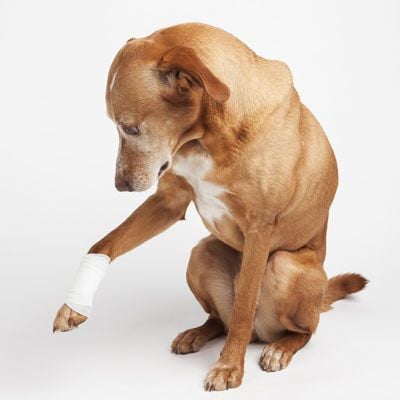
Is your dog limping on one leg?
Limping usually means your dog is trying to take weight off a painful limb.
You may notice that your dog:
Holds one leg completely off the ground
Only touches the toes down
Puts less weight through one paw
Has an exaggerated head bob while walking
What does a head bob mean?
A head bob often happens when a dog is shifting weight away from a sore front leg.
Causes can range from something relatively simple, such as an injured nail or something stuck in the paw, through to joint disease, ligament injury or other orthopaedic problems.
If the lameness is persistent, worsening or clearly painful, it should be assessed by a veterinarian.
Is your dog limping on a back leg?
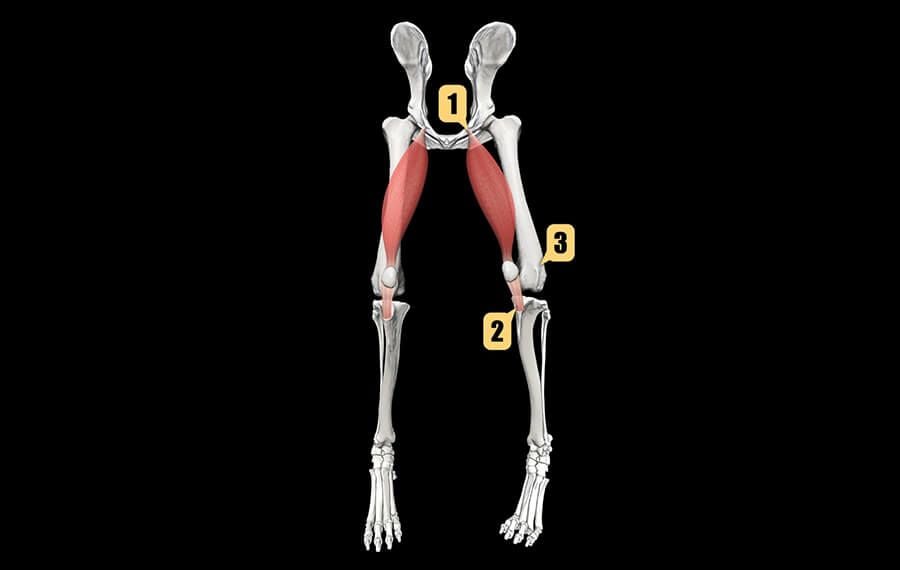
One common cause of hind-leg lameness is an injury to the cranial cruciate ligament, known as the CCL.
This is similar to an ACL injury in people.
Dogs with a CCL injury may suddenly become lame, struggle to put weight through the leg or develop a more gradual limp over time.
Depending on the severity of the injury, surgery such as TPLO may be recommended.
At VSOS, TPLO surgery is one of the most commonly performed orthopaedic procedures and is available with capped pricing and a surgical guarantee.
Limping usually means your dog is trying to take weight off a painful limb.
Is your dog skipping when walking?
A small dog that occasionally skips for a few steps may have a kneecap that is slipping out of position.
This condition is called medial patellar luxation, or MPL.
The kneecap moves out of its normal groove and the dog may briefly lift the leg, skip, then continue walking normally once the kneecap moves back into position.
Although some dogs do not appear particularly bothered in the early stages, repeated luxation can contribute to pain, joint damage and arthritis later in life.
In suitable cases, correcting the problem earlier can help protect long-term mobility.
Is your dog knuckling?
Knuckling is different from ordinary limping and can be an important warning sign.
Instead of standing normally on the paw pads, the dog places the top of the foot on the ground, with the toes folded underneath.
This may indicate a neurological problem involving the nerves or spinal cord rather than an issue confined to the bones or joints.
If your dog is knuckling, particularly in more than one leg, veterinary assessment should not be delayed.
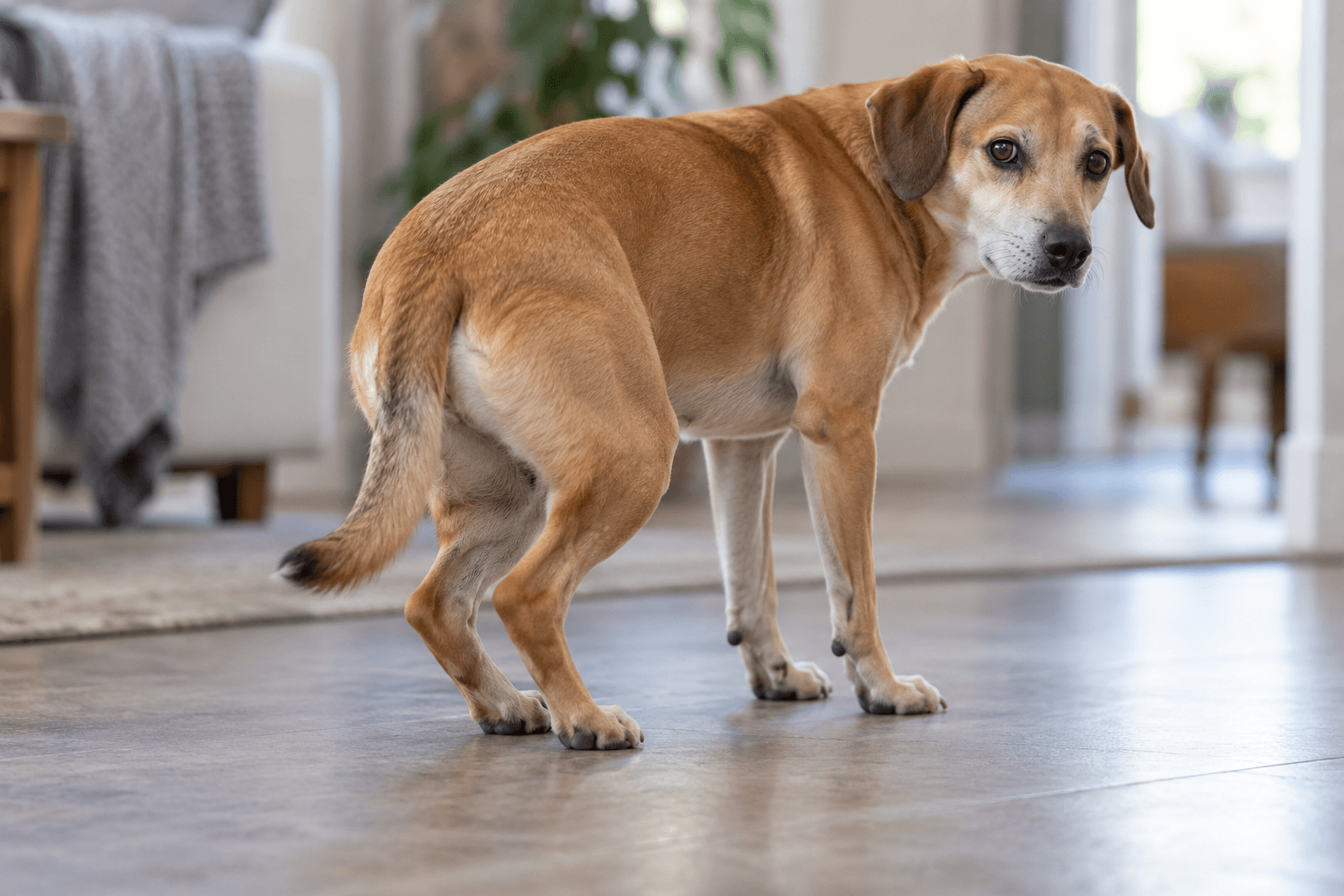
Is your dog staggering or weak in both back legs?
If both hind legs appear weak, uncoordinated or “drunk”, the problem may be coming from the spine or nervous system.
You may notice:
Wobbling through the back end
Crossing of the back legs
Difficulty standing
Knuckling
Falling or collapsing
Progressive weakness
One possible cause is a spinal disc problem where disc material presses on the spinal cord.
These cases can deteriorate quickly and may require advanced imaging such as MRI and, in some cases, emergency spinal surgery.
What if my dog suddenly cannot stand?
A dog that suddenly cannot stand or is paralysed in the back legs should be treated as an emergency.
This is particularly important if your dog is also unable to urinate normally.
Loss of bladder function can occur with serious spinal or neurological conditions and can become life-threatening.
Rapid assessment gives the veterinary team the best opportunity to identify the cause and determine whether treatment is required urgently.
Importantly, bringing your dog in for emergency assessment does not mean you are committing to surgery.
The first priority is diagnosis. Once the problem is understood, the veterinary team can discuss all appropriate options, including surgical and non-surgical treatment where suitable.
What if the lameness moves from one leg to another?
Sometimes the problem does not stay in one leg.
Your dog may look sore in one front leg one day, another leg the next, or appear as though all four feet are uncomfortable.
This can look as though the dog is “walking on hot coals”.
A shifting lameness like this may suggest an inflammatory or immune-mediated joint condition rather than a surgical orthopaedic problem.
Diagnosis may involve blood tests, imaging and sampling fluid from the joints.
Treatment is generally medical rather than surgical.
Could arthritis be causing the problem?
Yes.
Arthritis is a common cause of stiffness, reduced activity and lameness, particularly in older dogs.
However, ongoing limping should not automatically be assumed to be “just arthritis”.
Other problems, including elbow dysplasia, ligament injuries and more serious conditions, can cause similar signs.
Persistent or unexplained lameness deserves proper investigation.
What about elbow dysplasia?
Elbow dysplasia is a common cause of front-leg lameness, particularly in Labradors and several other breeds.
Dogs may show stiffness, intermittent limping or a noticeable head bob while walking.
In some cases, arthroscopy can be used to examine the joint using a very small camera and specialised instruments.
This minimally invasive technique can allow specialists to diagnose, and sometimes treat, joint abnormalities during the same procedure.
Could a serious condition such as bone cancer cause lameness?
Although less common, persistent or unexplained lameness can occasionally be associated with more serious conditions, including bone cancer.
This may be more of a concern in older dogs or when the lameness is chronic and not improving.
Imaging such as X-rays or CT can often help investigate this quickly.
When should I seek urgent veterinary care?
Seek urgent veterinary attention if your dog:
Suddenly cannot stand
Becomes paralysed
Develops weakness in both back legs
Is staggering or severely uncoordinated
Is knuckling
Is unable to urinate
Is in obvious or severe pain
Deteriorates rapidly
These signs can indicate a neurological or spinal emergency where early diagnosis and treatment may make a significant difference.
What happens at VSOS?
Dogs with walking difficulties can be assessed through the VSOS emergency service and, if required, rapidly transferred to the appropriate specialist team.
Depending on the problem, this may include:
Neurology
Orthopaedic surgery
Internal medicine
Advanced diagnostic imaging
VSOS has MRI, CT and other specialist diagnostic equipment available under one roof, helping the team move quickly from assessment to diagnosis and treatment.
Our aim is to minimise delays, reduce unnecessary hospital stays and help your dog receive the right care as quickly as possible.
The Key Message
A limp does not always mean an emergency.
But changes such as knuckling, staggering, weakness in both back legs or an inability to stand are very different from a simple limp and should be assessed quickly.
If you are unsure what you are seeing, it is always worth seeking veterinary advice.
Understanding how your dog is walking can provide valuable clues, and early assessment can help identify whether the problem is minor, orthopaedic, neurological or something requiring urgent specialist care.