&geometry(309x90) "VSOS")

Bladder Stones in Dogs and Cats: Signs and Minimally Invasive Treatment Options
Bladder stones can affect both dogs and cats. Some pets show obvious discomfort, while others may only have subtle changes in the way they urinate.
You may notice more frequent urination, straining, blood in the urine, repeated trips to the litter tray, or your pet taking longer than usual to urinate.
If a stone moves into the urinary tract and causes a blockage, it can quickly become an emergency.
The good news is that treatment has advanced significantly.
At VSOS, some bladder stones can be removed using minimally invasive techniques such as endoscopic retrieval, laser lithotripsy and PCCL, helping suitable patients avoid traditional open bladder surgery.
What are bladder stones?
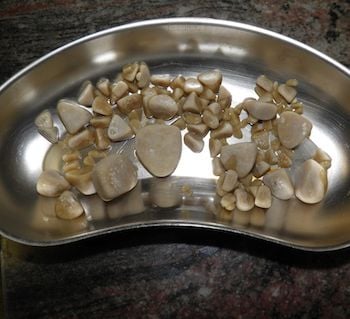
Bladder stones are hard mineral deposits that form inside the bladder.
They can vary in size, number and type.
Some are tiny, almost like grains of sand, while others become much larger.
Different types of stones can form for different reasons, so understanding what the stone is made from can help guide both treatment and future management.
What signs might I notice?
Common signs include:
Urinating more often
Straining to urinate
Passing only small amounts
Blood or a pink tinge in the urine
Taking longer to urinate
Licking around the genital area
Repeated trips to the litter tray
Changes in normal urinating posture
Occasionally, owners may even notice tiny grains or stone-like material in the urine.
If your pet is repeatedly trying to urinate but producing little or no urine, seek veterinary attention urgently.
Why do some pets develop bladder stones?
There is no single cause.
Factors can include:
Urine concentration and pH
Urinary tract infections
Diet
Genetics
Breed predisposition
Other urinary conditions
Some breeds are more prone to particular stone types. Schnauzers, for example, are commonly associated with calcium-containing stones.
However, bladder stones can occur in many different breeds of dogs and cats.
How are bladder stones diagnosed?
Diagnosis may involve:
Urine testing
Blood testing
Ultrasound
X-rays or other imaging
Imaging helps determine how many stones are present, where they are located and their approximate size.
That information is important when deciding on the safest and most effective treatment.
What happens if a bladder stone causes a blockage?
A stone can sometimes move from the bladder into the urethra, the tube that carries urine out of the body.
If it blocks urine flow, your pet may repeatedly try to urinate but produce very little or nothing at all.
This is an emergency.
Seek urgent veterinary care if your dog or cat is straining repeatedly and you cannot see urine being passed.
Can bladder stones be removed without open surgery?
In many cases, yes.
The best treatment depends on the size, number and location of the stones, as well as the individual patient.
At VSOS, minimally invasive options may include several different techniques.
Flushing small stones
Very small stones may sometimes be flushed from the bladder under anaesthesia through the natural urinary tract.
Endoscopic stone removal
A small camera can be passed into the urinary tract and specialist baskets used to retrieve suitable stones.
This can allow some stones to be removed without making an incision into the bladder.
Laser lithotripsy
Laser lithotripsy uses targeted laser energy to break stones into smaller pieces so they can be removed.
Because the treatment is performed using a minimally invasive scope, it may reduce the need for traditional open surgery in suitable patients.
Dr Karina Graham explains this specialised procedure, showing exactly how laser lithotripsy works and why it can make such a difference for selected cases.
PCCL
PCCL, or percutaneous cystolithotomy, is another minimally invasive treatment option.
A small access point is created into the bladder, and a camera is used to identify and remove the stones.
Why minimally invasive treatment can make a difference
Where appropriate, minimally invasive procedures can offer important benefits for pets, including:
Smaller or no traditional surgical incisions
Less tissue disruption
Reduced discomfort
Faster recovery
Earlier return home
The right technique depends entirely on the individual pet and the type and location of the stones.
Traditional bladder surgery, called a cystotomy, is still required in some cases, but advanced equipment and specialist expertise mean there are now more treatment options than there once were.
A real-world example: Daisy
Daisy underwent a rare minimally invasive procedure performed by Dr Karina Graham and the VSOS team using a ureteroscope and laser lithotripsy.
Her case is a strong example of how specialised equipment and advanced minimally invasive techniques can sometimes avoid a larger surgical procedure and support a smoother recovery.
Can bladder stones come back?
Yes.
Some pets are prone to developing bladder stones repeatedly.
If your pet has had stones before, regular monitoring is important even when they seem completely well.
The aim is to identify new stones while they are still small, before they cause pain, obstruction or require more complicated treatment.
Your veterinarian may recommend:
Regular urine testing
Follow-up imaging
Dietary management
Other strategies based on the type of stone
When stones are removed, they can also be sent for analysis to determine what they are made from. This can help guide future management and reduce the risk of recurrence where possible.
The key message
Bladder stones can range from a source of ongoing discomfort to a serious emergency if they block urine flow.
Early diagnosis matters.
It can also open up more treatment options.
At VSOS, advanced techniques such as endoscopic stone removal, laser lithotripsy and PCCL mean that some pets may be able to avoid traditional open bladder surgery altogether.
If your pet is showing changes in urination, have them assessed. If they are repeatedly straining and producing little or no urine, seek urgent veterinary attention.