Patent Ductus Arteriosus (PDA) in Dogs

Patent ductus arteriosus, commonly known as PDA, is a congenital heart condition caused by a blood vessel that does not close normally after birth.

This creates abnormal blood flow between two major blood vessels near the heart, placing additional strain on the heart and lungs.

The good news is that PDA can usually be corrected. When diagnosed and treated before irreversible heart damage develops, most dogs can go on to live a normal life without ongoing cardiac medication or restrictions related to the condition.

At VSOS, most suitable patients can be treated using a minimally invasive catheter-based procedure, avoiding the need to open the chest.
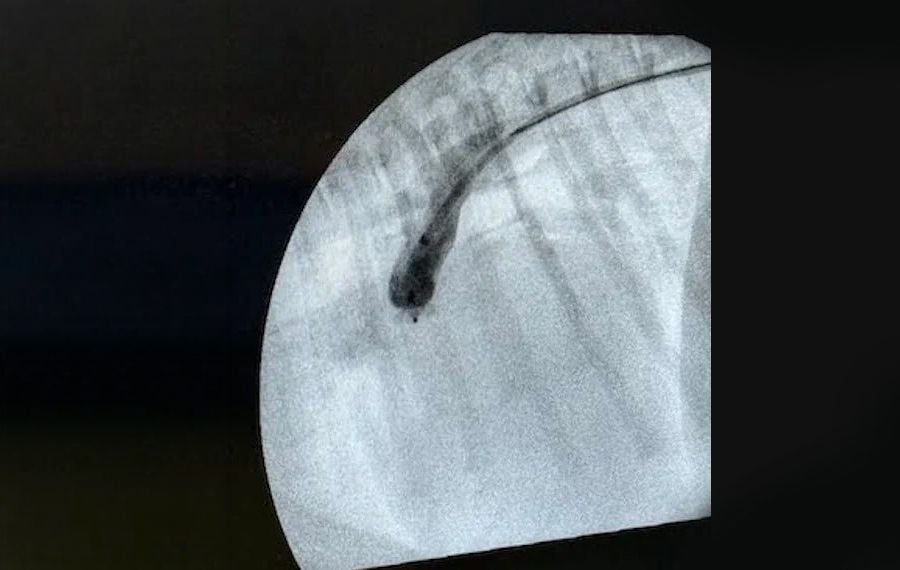
What is PDA?

Before birth, puppies have a blood vessel called the ductus arteriosus. It allows blood to bypass the lungs while the puppy is developing in the womb.

After birth, this vessel should close as the puppy begins breathing normally.

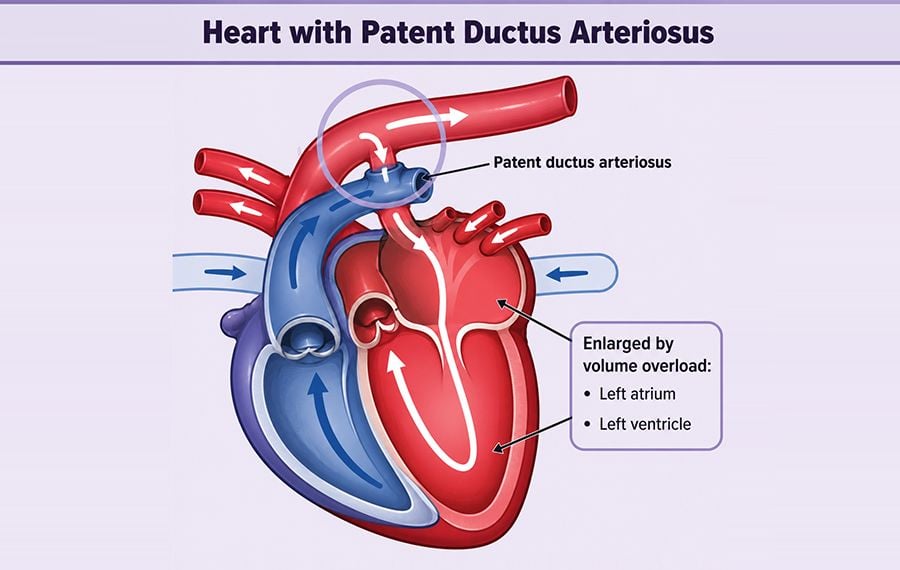
In dogs with PDA, the vessel remains open. This causes too much blood to circulate through the lungs and back into the left side of the heart.

Over time, this can cause the heart to enlarge and may eventually lead to congestive heart failure.

How is PDA detected?

Many puppies with PDA appear healthy and show no obvious signs.

The condition is often first suspected when a veterinarian hears a distinctive heart murmur during a puppy examination or vaccination appointment.

Some dogs may develop:

  • Reduced energy

  • Difficulty exercising

  • Rapid or laboured breathing

  • Coughing

  • Poor growth

  • Weakness or collapse

A specialist echocardiogram is used to confirm the diagnosis and assess how the PDA is affecting the heart.

Depending on the individual patient, an ECG, blood tests, chest imaging or other investigations may also be recommended.

Heart with Patent Ductus Arteriosus

Why is early treatment important?

PDA places ongoing strain on the heart.

Closing the abnormal vessel stops this unwanted blood flow and allows the heart to work more normally.

When treatment occurs before permanent heart damage develops, the prognosis is usually excellent. Most successfully treated dogs can expect a normal quality of life and lifespan.

Minimally invasive PDA closure

Minimally invasive PDA closure

Most dogs with PDA are suitable for minimally invasive closure using a catheter-based device.

During the procedure, the cardiologist accesses the PDA through a blood vessel in the groin.

A fine catheter is guided through the blood vessel and into the PDA using advanced imaging. A small closure device is then positioned inside the abnormal vessel to block the unwanted blood flow.

The procedure is completed through a very small incision in the leg, often requiring only a single suture.

Benefits of minimally invasive treatment

Compared with traditional surgical ligation, catheter-based closure may offer:

No incision into the chest

A much smaller wound

Less post-operative discomfort

Faster recovery

Shorter hospitalisation

Reduced risk of serious bleeding

A lower chance of residual blood flow through the PDA

Which dogs are suitable?

Most puppies and young dogs diagnosed with PDA are suitable candidates for minimally invasive closure.

Adult dogs may also benefit if irreversible heart changes have not developed.

A detailed echocardiogram allows the cardiologist to assess these factors and determine the safest treatment approach.

When may surgery still be required?

Surgical ligation may occasionally be recommended for:

  • Very small patients whose blood vessels cannot safely accommodate the catheter equipment

  • Dogs whose PDA anatomy is unsuitable for device closure

  • Rare cases where a catheter procedure cannot be completed safely

Your cardiologist will discuss the recommended treatment after reviewing your dog’s echocardiogram.

What happens on the day?

Most dogs are admitted to VSOS on the morning of the procedure.

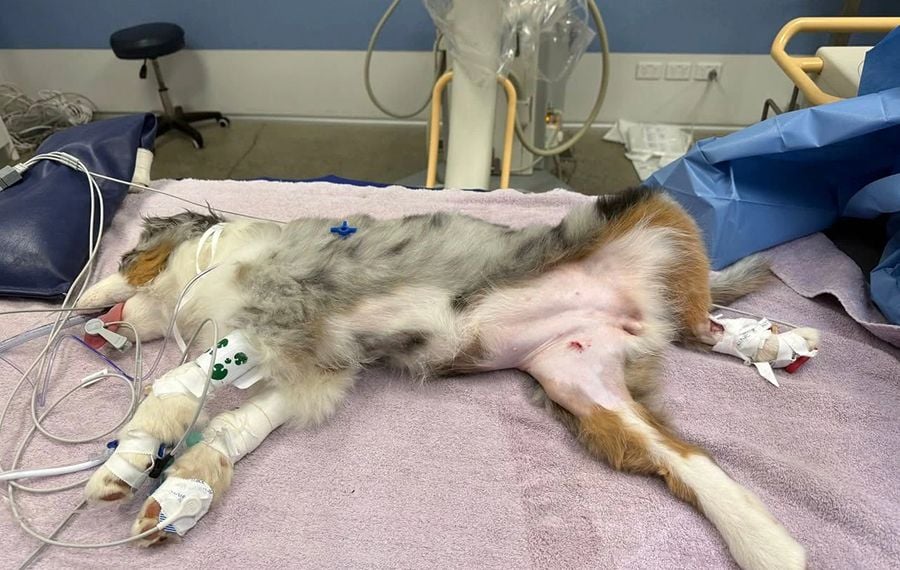
They are placed under general anaesthesia and monitored by an experienced specialist team while the closure device is positioned.

Patients usually remain in hospital overnight for observation and return home the following day.

Recovery after PDA closure

Recovery is generally rapid.

Most dogs are comfortable and return to their normal routine within a few days.

Exercise is usually restricted for one to two weeks while the small incision in the leg heals. After this, most dogs can gradually return to normal activity.

Follow-up care

A follow-up appointment and echocardiogram are generally recommended six to eight weeks after the procedure.

This confirms that:

  • The device remains securely positioned

  • Blood flow through the PDA has stopped or reduced to a clinically insignificant level

  • The heart is responding well after closure

Once healing is complete, the vast majority of dogs require no ongoing cardiac medication or long-term restrictions related to the PDA.

Risks and expected outcomes

As with any procedure performed under general anaesthesia, minimally invasive PDA closure carries some risk.

Possible complications include:

  • Bleeding

  • Movement of the closure device

  • Heart rhythm disturbances

  • Residual blood flow through the PDA

  • Rare complications requiring emergency surgery

  • Very rare life-threatening complications

Serious complications are uncommon.

The success rate is very high, with complete closure achieved in the overwhelming majority of patients.

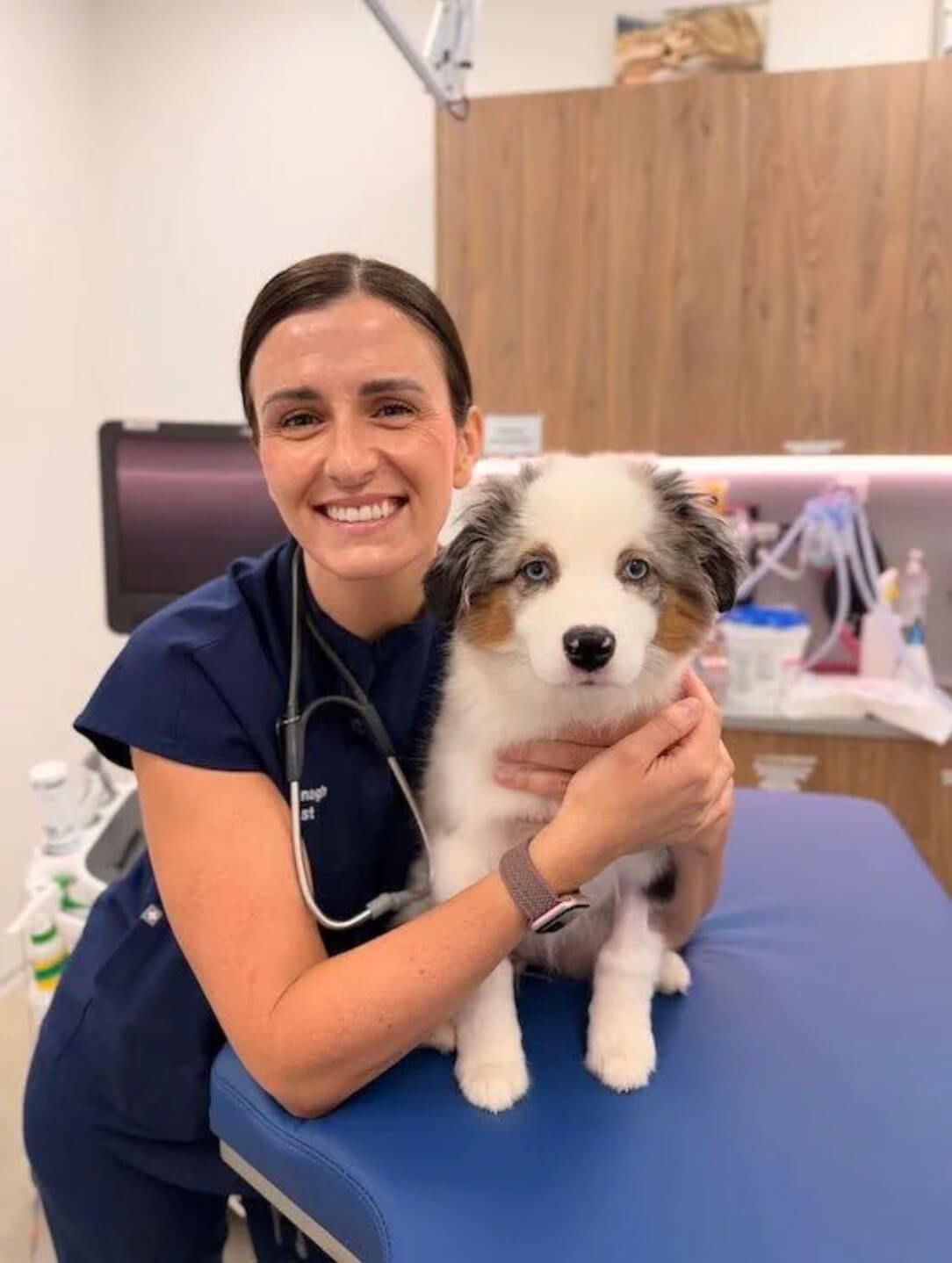
Dr Julie Kavanagh explains PDA

Veterinary cardiologist Dr Julie Kavanagh explains what PDA is, why early treatment matters and how minimally invasive closure can correct the condition without opening the chest.

Why choose VSOS?

PDA closure requires specialist cardiology expertise, advanced imaging and catheter-based equipment.

At VSOS, your pet’s care is supported by:

  • Specialist veterinary cardiologists

  • Advanced echocardiography and cardiac imaging

  • Minimally invasive catheter-based treatment

  • Specialist anaesthesia and monitoring

  • Overnight hospital care

  • 24-hour emergency and critical care support

  • Clear communication with owners and referring veterinarians

Our aim is to correct the underlying heart defect wherever possible and give each patient the best chance of a normal life.

PDA closure requires specialist cardiology expertise

Mia’s story

Mia was diagnosed with PDA after her veterinarian detected a heart murmur.

Following specialist assessment, she underwent minimally invasive PDA closure at VSOS.

Fixed-price PDA closure

VSOS offers a fixed-price package for minimally invasive PDA closure.

The package includes:

  • Initial specialist consultation

  • PDA occlusion procedure

  • Closure device

  • Anaesthesia

  • Hospitalisation

  • Routine post-operative care

  • Follow-up heart scan six to eight weeks after the procedure

Speak with our cardiology team

If your puppy or dog has been diagnosed with PDA, or your veterinarian has detected a concerning heart murmur, early specialist assessment is recommended.

Contact the VSOS cardiology team to discuss assessment and minimally invasive PDA closure.

Frequently Asked Questions

VSOS
Welcome Here
Visit Us at