&geometry(309x90) "VSOS")
Total Hip Replacement at VSOS
State-of-the-art surgical intervention to resolve the pain and immobility associated with advanced Hip Dysplasia and Osteoarthritis.
For dogs suffering from the chronic pain of hip dysplasia or advanced osteoarthritis, a Total Hip Replacement (THR) is often the only treatment that can fully restore a pain-free, normal life. It is not just a surgery; it is a new beginning. We expect our pets to regain full activity levels following a THR, which often involves plenty of running and jumping.
At Veterinary Specialists of Sydney (VSOS), we provide a world-class hip replacement service led by Specialist Surgeon Dr Rob Adams. We utilise the BioMedtrix Universal Hip System, the most widely used and trusted canine hip replacement system in the world, having been performed in over 60,000 procedures globally.
Understanding the Condition: What is Hip Dysplasia?
To understand why a replacement is necessary, it helps to understand the disease. The hip joint is a "ball and socket" joint. In a healthy dog, the ball (femoral head) fits perfectly into the socket (acetabulum), allowing for smooth, gliding movement.
Hip dysplasia is an abnormal development where the fit is poor. The joint experiences "laxity" or looseness, causing instability. Over time, this instability causes the cartilage to wear away, leading to bone-on-bone contact, chronic inflammation, and osteoarthritis.
Signs of Hip Pain: Symptoms can be subtle and are often mistaken for "just slowing down."
- Bunny-hopping: Running with both back legs moving together.
- Muscle Atrophy: Thigh muscles appear thinner or weaker than the shoulders.
- Reluctance to Ascend: Refusing to climb stairs or jump into the car.
- Behavioural Changes: A once playful dog becomes withdrawn or irritable due to constant, low-grade pain.
What is Total Hip Replacement?
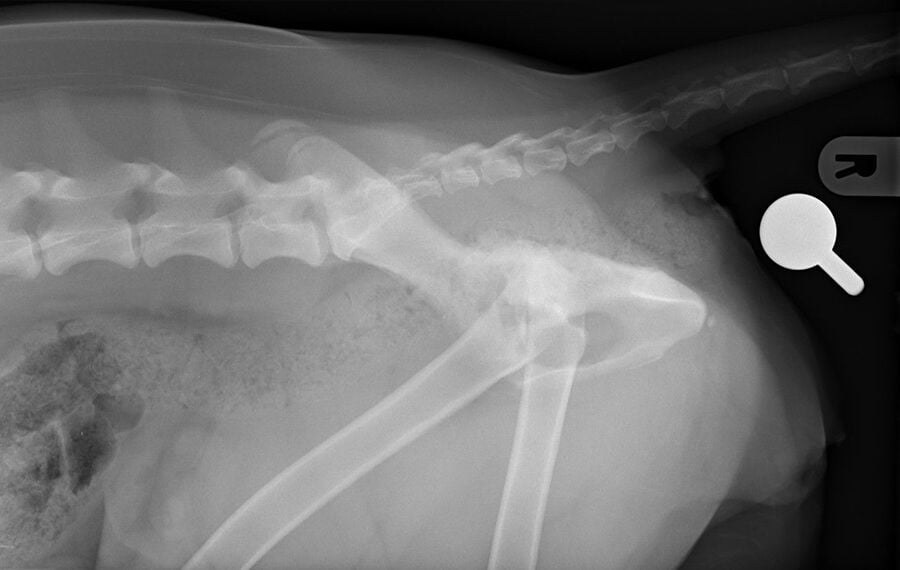
Total Hip Replacement (THR) involves removing your pet’s diseased hip joint and replacing it with a high-tech prosthetic implant system. By replacing an injured or diseased hip, we can help pets live a normal life without joint pain.
The surgery is recommended for pets with painful hips that have not responded to other treatments. Most pets will make a full recovery and have a much better quality of life free from hip pain. Owners often comment how much happier their pet seems after surgery.
The procedure replaces the two main components of the joint:
The Ball (Femoral Head): The damaged top of the femur is removed and replaced with a medical-grade titanium stem and a polished metal ball.
The Socket (Acetabulum): The worn hip socket in the pelvis is resurfaced with a high-density polyethylene cup.
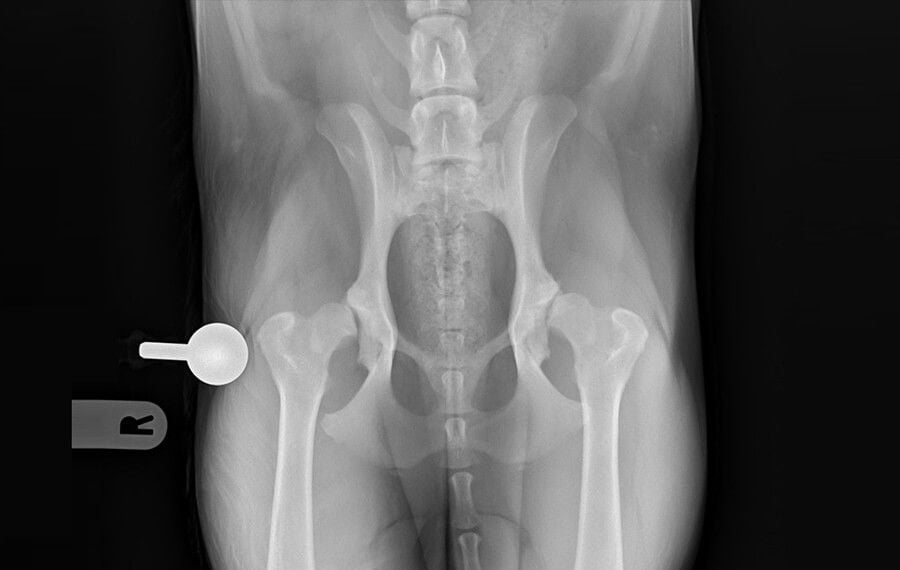
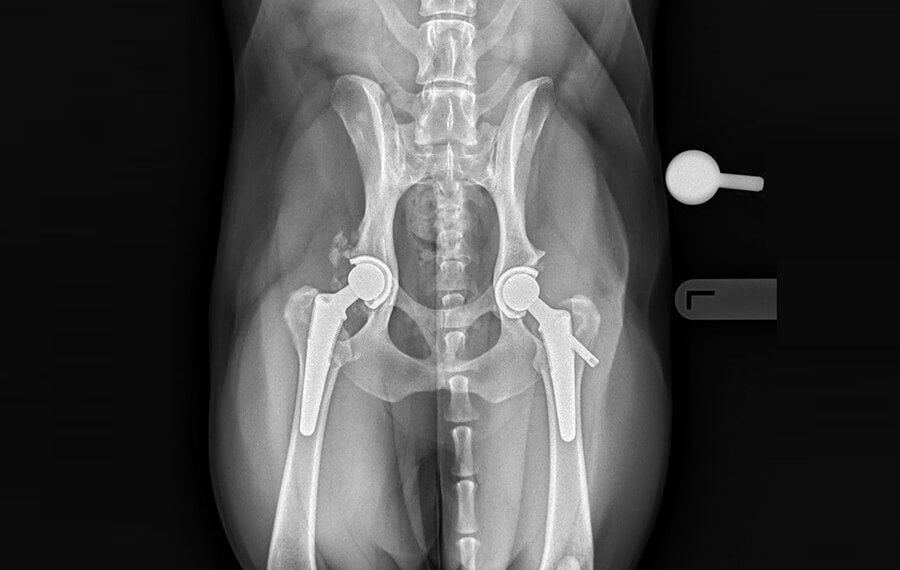
These components function exactly like a healthy biological joint, eliminating the source of pain entirely. Due to the complexity, hip replacement is an advanced orthopaedic procedure and should only be performed by very experienced orthopaedic surgeons and in clinics set up to perform such procedures safely.
The Technology: BioMedtrix Universal Hip System
At VSOS, we do not compromise on the quality of implants. We use the BioMedtrix system, which allows for modular interchangeability to suit every patient’s unique anatomy.
Biologic Fixation (BFX®): The "Cementless" Approach
Dr Rob Adams primarily utilises the BFX system. These implants are manufactured from titanium alloy and feature a specialised porous surface. This advanced texture allows your dog’s natural bone to grow into the metal surface of the implant. This creates a permanent, biological bond between the bone and the prosthesis, offering exceptional long-term stability without the need for bone cement. The use of cement in hip replacements however, is still used in certain breeds and some older patients.
Advanced Materials
- Titanium Alloy: Chosen for its superior biocompatibility and mechanical strength.
- Poly-XVE: The acetabular cups are made from highly crosslinked polyethylene. This material is designed to resist wear by up to 95% compared to standard plastics, preventing degradation and ensuring the implant lasts for the dog’s lifetime.
Making the Decision: A Collaborative Approach
Deciding whether to pursue Total Hip Replacement is a major decision. It requires careful consideration of your dog's condition, your lifestyle, and your financial resources.
At VSOS, we practice a model of Shared Decision Making.
We Listen: The consultation begins with you describing your hopes, fears, and restrictions regarding your pet's care.
We Explain: We provide the clinical expertise and describe the options in detail.
We Decide Together: We do not simply tell you what to do, nor do we overwhelm you with data and leave you to decide alone. We deliberate together to find the ideal treatment for your specific situation.
We are happy to see patients at any stage to help you determine if THR is the right choice for your pet at that time.
Data-Driven Decision Making
We know this is a big decision. Dr Rob Adams uses evidence-based data to help owners weigh the risks and benefits.
Studies comparing conservative management (non-surgical) vs. Total Hip Replacement have shown:
Conservative Management: Approximately 42 out of 100 dogs will still suffer from long-term exercise restriction.
Total Hip Replacement: Only 8 out of 100 dogs demonstrate mild discomfort when assessed by a vet.
Success Rate: Over 95% of patients who receive a BioMedtrix THR recover full mobility.
This data highlights that while surgery carries risks, it offers the highest probability of a full return to normal activity.
When is the Right Time?
Age is Just a Number. While age is a factor, there is no strict upper age limit for a comfortable life. Whether your dog is 2 or 12, if they are in pain and generally healthy, they may be a candidate for surgery.
Young Dogs (Early Intervention) We generally do not perform THR before 10 months of age, as we must ensure the bone growth plates are fully closed.
- Luxoid Hips: For young dogs with "luxoid" hips (hips with extreme laxity that are at risk of subluxation), early surgical intervention can be life-changing, preventing years of pain and muscle wastage.
Alternatives to Hip Replacement
During your consultation, we may discuss other options.
Femoral Head and Neck Excision (FHNE): This involves removing the ball of the joint but not replacing it, relying on scar tissue to form a "false joint." While this removes the source of bone pain, the functional outcome is less predictable and generally inferior to a replacement, particularly in larger dogs.
Conservative Management: Managing the pain with medication and physiotherapy. This is often the first step, but it manages symptoms rather than curing the problem.
The VSOS Difference
A Multidisciplinary Team
Orthopaedic surgery at VSOS is safer because we are a fully multidisciplinary hospital. We look at the whole patient, not just the X-ray.

Pre-Surgical Screening
If your dog has a heart murmur, our on-site Cardiologist can assess them before anaesthesia.

Specialist Anaesthesia
Your dog will be cared for by a Specialist Anaesthetist. A key advantage at VSOS is our use of advanced, ultrasound-guided nerve blocks. This localises pain relief to the leg, meaning your dog wakes up comfortable and requires fewer heavy systemic drugs, leading to a smoother recovery.

Sterility
Infection is a rare but serious risk in joint replacement. Our theatres are purpose-built with ample space and state-of-the-art airflow systems to maintain the highest standards of sterility.
The Treatment Journey
The "Assessment First" Consultation.
We do not rush into surgery. Your first visit is a consultation to determine if surgery is right for you and your dog. We will discuss your goals, the risks, and the alternatives.
We do not rush into surgery. Your first visit is a consultation to determine if surgery is right for you and your dog. We will discuss your goals, the risks, and the alternatives.
Surgical Planning.
If we proceed, we will perform specific digital templating X-rays. This is not just a diagnostic scan; it is a blueprint. We map your dog's unique anatomy to select the exact size and angle of the implant required before we even enter the operating theatre.
If we proceed, we will perform specific digital templating X-rays. This is not just a diagnostic scan; it is a blueprint. We map your dog's unique anatomy to select the exact size and angle of the implant required before we even enter the operating theatre.
The Surgery & Hospitalisation.
The procedure typically takes around 120-150 minutes. Your dog will usually stay with us for 2-3 days post-surgery to ensure their pain is managed and they are stable on their feet.
The procedure typically takes around 120-150 minutes. Your dog will usually stay with us for 2-3 days post-surgery to ensure their pain is managed and they are stable on their feet.
For your peace of mind, routine THR is a fixed-price which includes the initial assessment, x-rays and post-surgery support from our team.
Recovery and Rehabilitation
The success of a hip replacement depends heavily on what happens after the dog leaves the hospital.
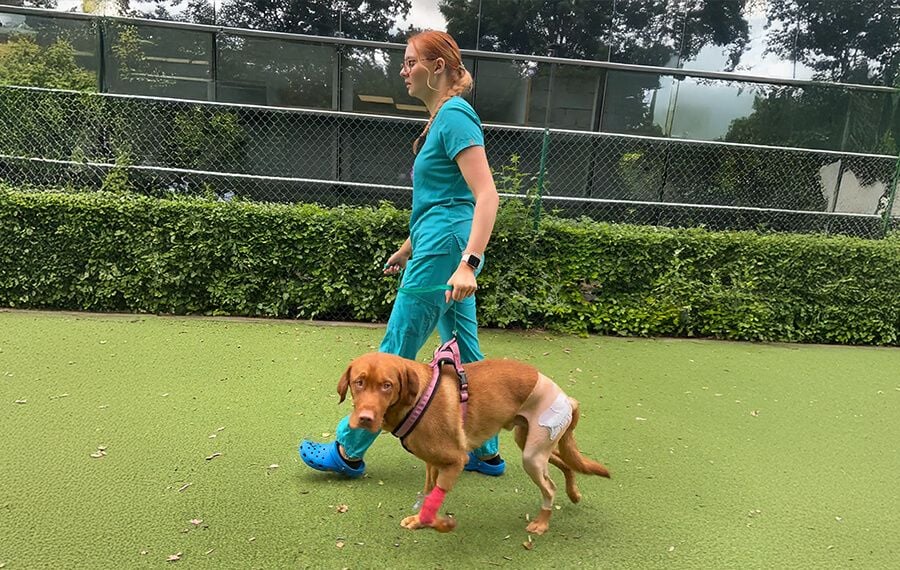
Weeks 1-8: Strict rest is essential. The bone needs time to grow into the porous surface of the implant. Your dog must be restricted to a crate or a single room and only taken outside on a lead for toileting.
The 8-Week Check: We will see you back for follow-up X-rays to confirm the bone has bonded with the implant.
Weeks 9-14: If the X-rays are good, we begin a gradual return to exercise. Most dogs are off-lead and enjoying a normal life by 12-16 weeks post-surgery.
Will the Implant Wear Out?
A common concern among owners, often based on human hip replacements, is that the implant will eventually wear out and require revision surgery.
In dogs, this is very uncommon. Unlike in humans, we do not tend to see the polyethylene "cup" wear out. The BioMedtrix implants we use are designed to last a lifetime. This means that if you choose surgery for a young dog, you can be confident that the implant will likely serve them well into their senior years without needing to be replaced.

Risks and Complications
While the success rate is high, THR is a major procedure.
Dislocation (Luxation)
The new joint can pop out if the dog runs or jumps too early. This is why strict rest is critical. This usually happens due to trauma, a fall, or excessive over-activity during the critical early healing period (the first 8-12 weeks).
Infection
A rare but potentially serious risk where bacteria infect the surgical site or the implant. This can occur early after surgery or sometimes much later if bacteria travel through the bloodstream from another source (e.g., dental or skin infection). We take every precaution, and risk is typically under 0.5% but infection can require implant removal.
Fracture
A crack or break in the femur (thigh bone) can occur during the implant placement, or sometimes due to trauma shortly after surgery, before the bone is fully rehabilitated. Most are repairable, often without affecting the hip replacement itself.
Implant loosening
The prosthetic components fail to integrate fully with the bone or loosen over time. This risk is generally higher in extremely active dogs (like working or hunting dogs) compared to companion pets. This risk occurs later, often months to years after surgery.
Sciatic Nerve Injury
The nerve that runs near the hip can be temporarily or, rarely, permanently damaged during the procedure, leading to weakness in the leg. This is rare (<1%) but may be slightly higher in older dogs with severe pre-existing arthritis
We will discuss these risks in detail during your assessment so you can make an informed choice. Most complications are treatable, but if a luxation or a fracture occurs, it will likely require further surgery to correct the issue and salvage the new joint
The success of the surgery is highly dependent on strict post-operative care. For the first 8-14 weeks, your pet must be carefully confined and their activity severely restricted to allow the bone and soft tissues to heal around the implant and prevent dislocation.
Meet Specialist Surgeon Dr Rob Adams
BVM&S, DipECVS, MRCVS | European Specialist in Small Animal Surgery
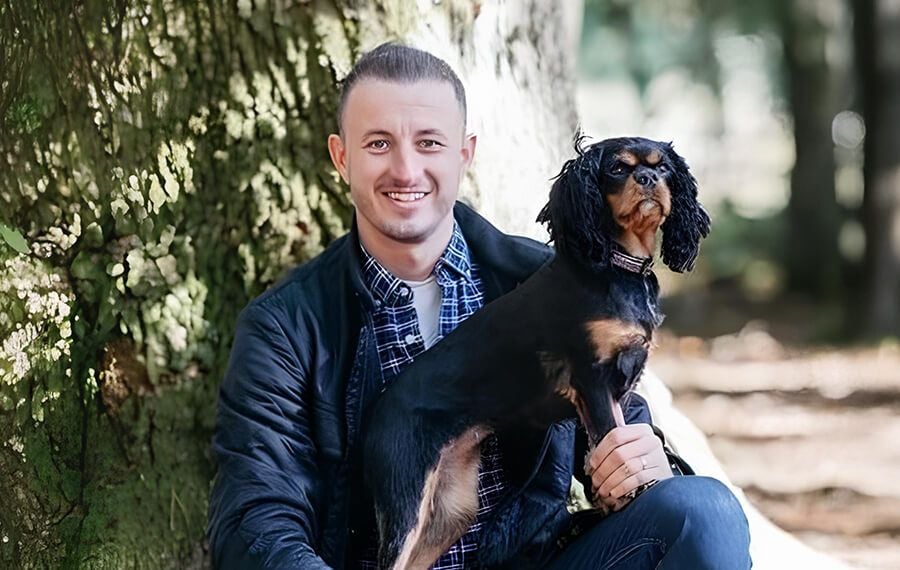
Dr Rob Adams is a highly experienced Specialist Surgeon with a passion for restoring mobility and quality of life to his patients. A graduate of the University of Edinburgh (2008), he completed his specialist training at the renowned Davies Veterinary Specialists in the UK.
Before joining VSOS, Dr Rob led the Orthopaedics service at a large multidisciplinary hospital in Yorkshire, where he successfully ran the Total Hip Replacement programme. His expertise spans complex joint replacements, minimally invasive fracture repair, and limb-sparing procedures for bone cancer.
Rob is known for his collaborative approach. He believes that surgery is just one part of the solution and works closely with pet owners to tailor treatment plans that fit their specific goals and lifestyle. Whether it’s a working dog needing to return to the field or a family pet needing a pain-free life, Rob treats every patient as an individual.
Open Communication. Expert Care.
Ultimately, our goal is to give your dog back the joy of movement. We are here to support you and your referring vet to ensure your pet gets the right care at the right time.