&geometry(309x90) "VSOS")

Dog Heatstroke in Sydney
What to look for, what to do, what not to do, and when to come to emergency
Emergency warning: If your dog is panting heavily, weak or wobbly, drooling thick saliva, vomiting/retching, breathing hard, collapsing, seizing, or has dark-red/blue gums, come to VSOS Emergency immediately.
Why heatstroke is so dangerous
Dogs can’t cool as efficiently as humans: they rely mostly on panting and can't sweat, with only minimal heat loss through paw pads. When panting can’t keep up, body temperature rises (hyperthermia), damaging the brain and vital organs; at very high temperatures, cell proteins begin to break down. This is why suspected heatstroke is always an emergency.
Which dogs are at risk?
Brachycephalic (flat-faced) breeds (e.g., French/English Bulldogs, Pugs, Peginkese), very young or old dogs, overweight dogs, long/thick-coated breeds, highly active/working dogs, dark coloured dogs and pets with heart or breathing disease.
Environments with poor air flow, high humidity, lack of shade/water are high risk for overheating (eg, a hot car). Exercising in warm weather is also high risk, particularly if the dog is not used to heat.
Signs of heatstroke in dogs
Early Signs:
- Excessive panting or laboured/fast breathing
- Restlessness or agitation
- Thick drooling
- Gum colour change (dark red, pale, purple or blue)
- High rectal temperature (>39.2 C)
As it worsens:
(GO to an EMERGENCY HOSPITAL AS FAST AS POSSIBLE)
- Vomiting/diarrhoea (sometimes bloody)
- Rapid heart rate, weakness/collapse, staggering
- Muscle tremors,
- Abnormal consciousness, responsiveness
- Collapse and seizures
FIRST AID - What to do on the way to VSOS
Move into shade, air conditioning or a breezy area.
Try to calm your dog.
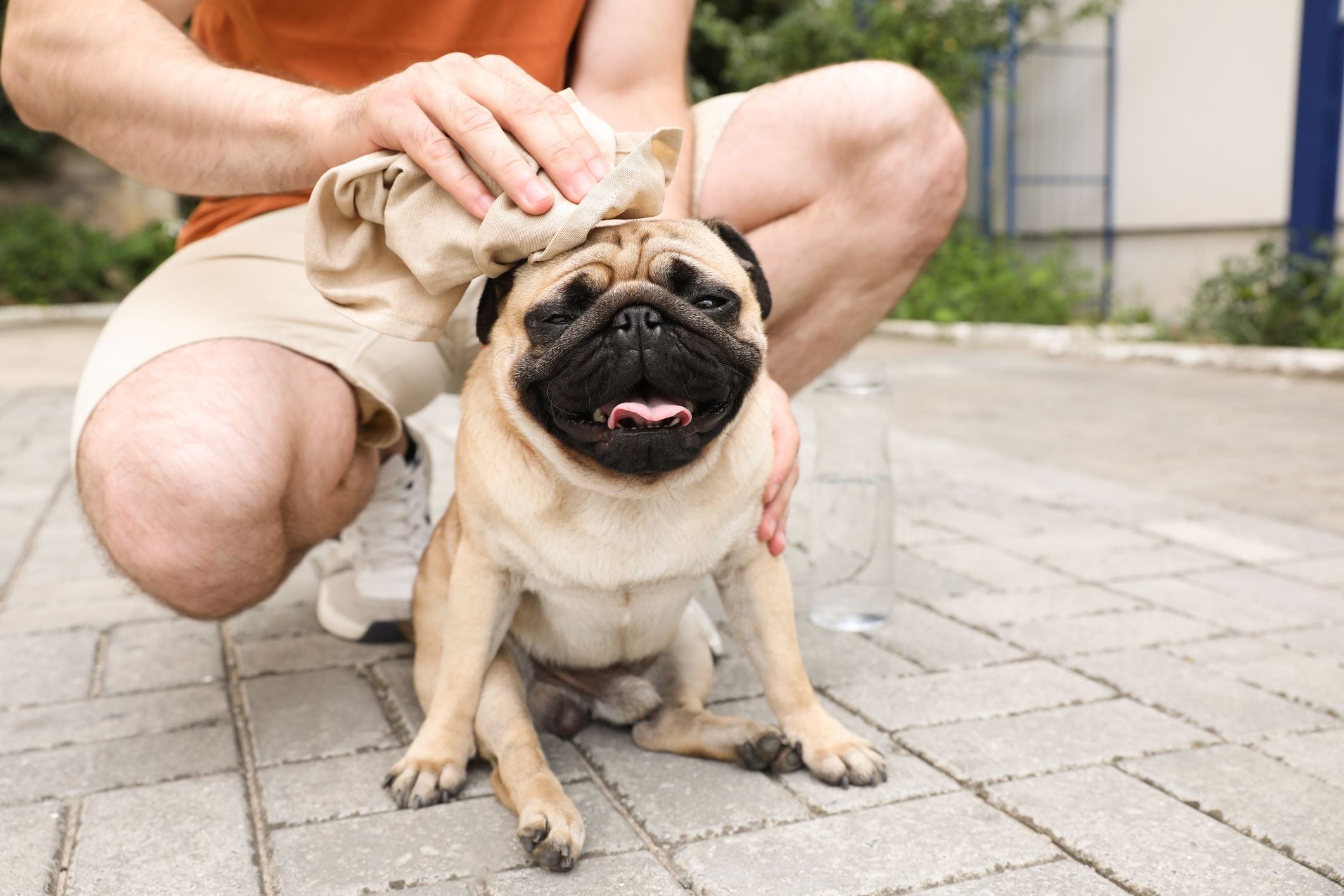
Start active cooling while arranging transport: wet all over with cool (not icy) water,
especially the body, groin and armpits; use a fan over the fur to boost evaporative
cooling.Offer small amounts of cool water and wet the mouth if your dog is alert and able to
swallow - do not force drinking as they can easily choke. DO NOT spray water into the
mouth with a hose or shower head.- Head straight to VSOS Emergency even if your dog seems to perk up; deterioration can continue after the initial cooldown.
What not to do (common mistakes to avoid)
- No ice baths. Rapid over-cooling can constrict blood vessels and impair heat loss. Use cool, not cold water.
- Don’t wrap in wet towels. This traps heat; instead, wet the coat, belly and feet and use airflow (fan or Air Conditioning).
- Don’t delay veterinary care. Even “mild” cases can suddenly worsen or develop complications (bleeding disorders, kidney/brain injury). Start cooling and travel to a vet simultaneously.
- No human medicines and don’t force water
When to bring your dog to Emergency
Choose Emergency now if any of the following apply:
- Breathing is hard, noisy or fast, or gums look blue/purple/dark red
- Wobbliness/weakness, collapse, seizures, or unresponsiveness
- Persistent vomiting/retching, thick ropey drool, or suspected aspiration
- Your dog is a flat-faced breed, very young/old, has heart/lung disease, or isn’t improving within 5 minutes of gentle cooling
- Heat exposure in a car or confined, poorly ventilated space
Heatstroke can kill within an hour in susceptible dogs; early anecdotal cases report fatality in as little as 15 minutes without prompt intervention. If in doubt, come in.
What to expect at VSOS Emergency
Our team will triage immediately and begin treatment tailored to severity, which may include:
- Cooing and IV fluids for shock/dehydration and internal cooling
- Oxygen therapy with a mask, or sedation, intubation & supportive breathing if required.
- Blood tests (blood clotting, organ function)
- Anti-nausea medications, pain relief, and antibiotics where indicated
- Blood/plasma transfusions if clotting abnormalities develop.
- Severe cases often require ICU monitoring for ongoing care. Early treatment significantly improves outcomes.
Sydney-smart prevention
- Never leave dogs in parked cars - temperatures soar even on mild days.
- Walk early/late, avoid midday heat, and keep exercise short and shaded when humid.
- Ensure constant shade + multiple water stations (add ice on hot days).
- Avoid hot surfaces (bitumen, sand) to prevent paw burns and extra heat load.
- Groom/clip heavy coats seasonally; consider cooling mats, shallow paddling pools, fans and AC.
- Mind the muzzle: restrictive muzzles hinder panting and heat loss.
- Acclimatise gradually after winter/cooler periods - dogs may need weeks to adjust to warmer weather.
Quick reference: Do-Don’t checklist
Do:
- Cover with running cool water + fan
- Keep the dog calm, shaded, and still
- Offer small sips if safe
- Travel to the VSOS Emergency during/after cooling
Don’t:
- Ice-bath or wrap in wet towels
- Delay veterinary assessment
- Force water or give human meds
- Resume exercise the same day
Final word from VSOS
Sydney’s summer heat and humidity make heatstroke a real risk. Recognising early signs, starting gentle cooling immediately, and coming straight to Emergency can be lifesaving. If you’re worried, even a little call us and set off now. We’re equipped for rapid cooling, oxygen, fluids, monitoring and ICU care when every minute counts.